Cups, Lids and Counts: Planning Drinks for an Event
How many cups per guest, which size for which drink, why a lid that is nearly the right diameter is no lid at all, and how much ice a party actually needs.
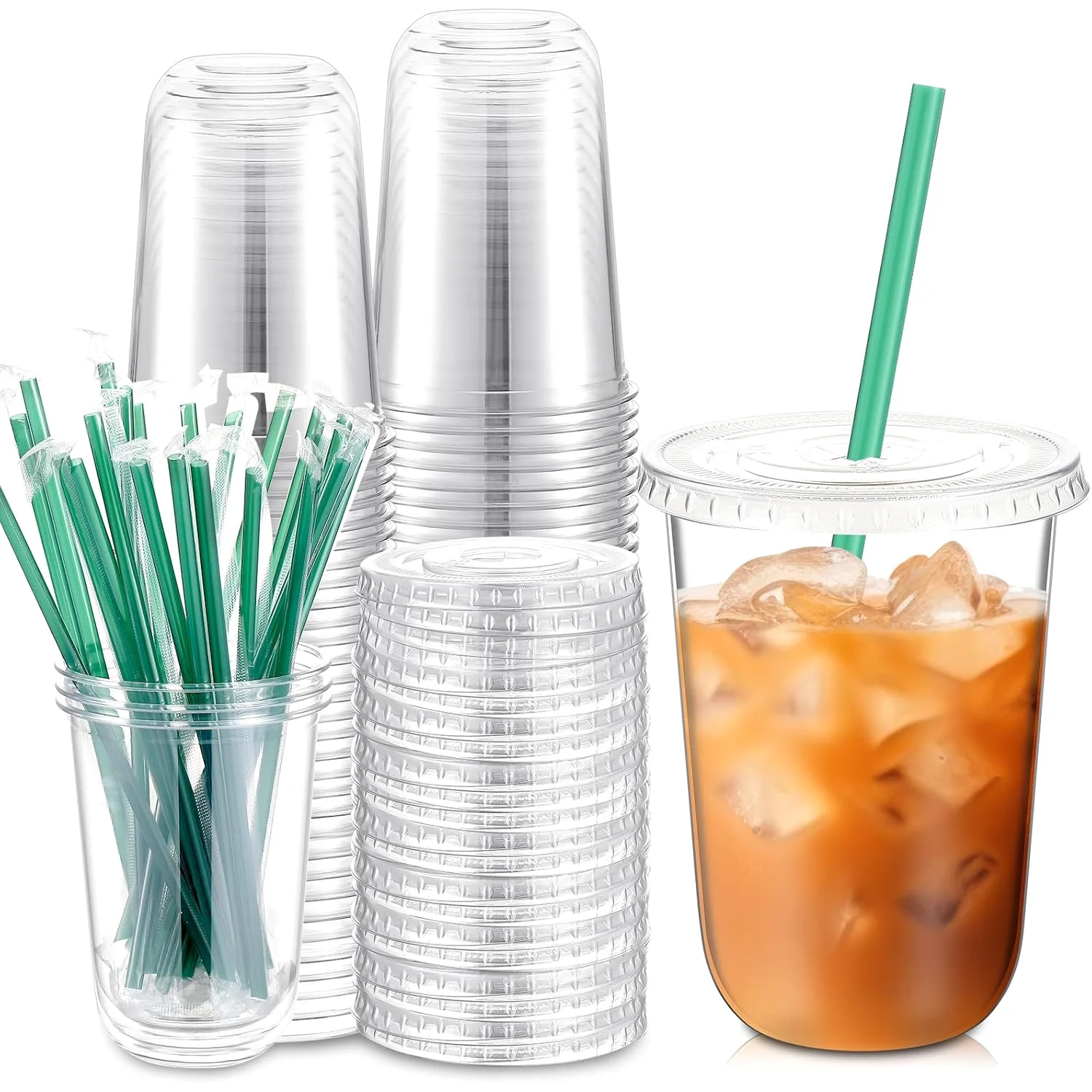
- How many cups: the number is not one per guest
- Which size for which drink
- Lids: the part that goes wrong
- What the plastic is rated for
- Disposable or reusable: the arithmetic nobody does
- The lost cup problem, and the cheapest fix for it
- If you are serving hot drinks as well
- Ice: the quantity everyone underestimates
- Building a drinks station that runs itself
- Afterwards
Drinks are the part of an event that is easiest to get almost right. Almost right means running out of the 16 ounce lids halfway through, or buying a hundred cups for forty guests and still running short, or discovering that the lids in the box seat on the cups but do not seal. All three are arithmetic problems, and all three have known answers.
How many cups: the number is not one per guest
The instinct is one cup per person. In practice people put a cup down, lose track of it, and take another. Outdoors, in a crowd, or anywhere people are moving between rooms, that happens more.
The working figure is about one and a half cups per guest for a two to three hour event, and two per guest if it runs longer, if it is hot, or if there is more than one kind of drink on offer. For a children's party assume two, because a cup put down at a children's party is a cup that is gone.
| Guests | Short event, 2 to 3 hours | Long event or hot day |
|---|---|---|
| 12 | 20 cups | 25 cups |
| 24 | 36 cups | 50 cups |
| 48 | 72 cups | 100 cups |
| 100 | 150 cups | 200 cups |
Buying in sets of 50 and 100 is usually cheaper per cup than three smaller packs, and the leftovers keep indefinitely in a cupboard, which is not true of most party purchases.
Which size for which drink
The single most useful thing to know about disposable cup sizes is that ice takes roughly a third of the volume. A 16 ounce cup filled with ice holds about 11 ounces of drink, which is why a 12 ounce cup that sounds adequate on paper produces a disappointing iced coffee.
| Size | With ice, roughly | Suits |
|---|---|---|
| 9 to 12 oz | 6 to 8 oz of drink | Children, tastings, hot coffee stations, wine and soft drinks without ice |
| 16 oz | About 11 oz | The default for events: iced coffee, soda, lemonade, cocktails |
| 18 to 20 oz | 12 to 14 oz | Summer parties, smoothies, anywhere ice melts fast |
| 24 oz and above | 16 oz and up | Outdoor events where refills are inconvenient |
| Drink pouches | A single serving, freezable | Lunchboxes, picnics, poolside, anywhere glass is a bad idea |
Lids: the part that goes wrong
A lid is matched to a cup by rim diameter, not by the number printed on the side. Manufacturers use a handful of standard rim sizes, and a 16 ounce cup from one line and an 18 ounce cup from another can share a rim while two cups both labelled 16 ounce do not. This is why lids bought separately are a gamble and why our cups are sold as sets with their lids.
There are three lid types and they are not interchangeable in use. A flat lid with a straw cross is for cold drinks and straws. A domed lid gives room for whipped cream or a tall head of foam. A sip lid with a raised spout is for hot drinks and for carrying without a straw. A domed lid on a hot drink will fog and drip; a flat straw lid on a hot drink is a burn waiting to happen.
The test for a good seal is unglamorous: fill a cup with water, put the lid on, and turn it upside down over a sink. A lid that holds for five seconds will survive a table. A lid that weeps at the rim will empty itself into somebody's bag.
What the plastic is rated for
Clear disposable cups are usually PET, which is why they are glass clear and why they are rated for cold drinks only. Cups intended for hot drinks are a different material and are built differently, with a rolled rim and often a wall that insulates. Putting a hot drink into a cold rated cup is not just a comfort problem: the cup softens and the shape goes.
The practical version for a host: check the page for hot or cold, do not microwave a disposable cup, and do not reuse a single use cup for a second event. Where a cup is dishwasher safe and meant to be reused, the page says so.
Disposable or reusable: the arithmetic nobody does
The argument for reusable cups at an event is usually made on principle and lost on logistics. It is worth doing the sum properly, because the answer is not the same for every event.
Reusable wins clearly when the same small group meets regularly in the same place, when there is a dishwasher within reach, and when somebody has agreed in advance to run it. It loses when guests circulate, because a reusable cup put down is a cup nobody will claim, and the alternative to disposal becomes washing forty cups at midnight.
| Event | Better choice | Why |
|---|---|---|
| Weekly gathering of the same eight people | Reusable tumblers | They get washed and used again; the cost disappears after a month |
| Birthday party at home, 20 guests | Disposable with lids | Cups get abandoned; lids let people carry drinks away from the table |
| Outdoor event with children | Freezable drink pouches | Cannot spill, do not need ice, and double as a cold pack in a bag |
| Wedding or hired venue | Disposable, in bulk | Nobody is washing anything, and breakage of hired glass is charged |
| Daily coffee at home | Reusable, one per person | The disposable habit is the expensive one here |
A middle path works better than either extreme at a mixed event: reusable tumblers for the people who stay in one place, and a stack of disposables at the door for the ones who do not. The cups do not have to match to be a plan.
The lost cup problem, and the cheapest fix for it
A quarter of the cups at any event are abandoned half full, which is where the one and a half per guest figure comes from. It is also a waste problem you can halve for the price of a marker.
The fixes, in order of how well they work: a marker pen beside the cups so people write a name, which works with adults and not at all with children; different coloured lids or straws assigned per person, which works with children and not at all with adults; and stickers, which work with both and are the only one that survives being carried outside. A sheet of plain labels and a pen at the drinks station costs almost nothing and visibly cuts the pile at the end.
The other half of the problem is where cups go when they are finished. A bin nobody can see is a bin nobody uses. Put it where the traffic naturally ends, not tucked behind the table where it looks neat.
If you are serving hot drinks as well
A hot drinks station is a different set of problems: the cups are a different material, the lids are a different shape, and the queue moves more slowly because pouring hot liquid is slower than pouring cold.
Three things make it work. Use a cup rated for hot service, not a clear cold cup. Use a sip lid rather than a straw lid, because a straw in a hot drink is a burn. And put the milk, sugar and stirrers on a separate small table beside the main one, so the person doctoring their coffee is not standing in front of the urn.
Plan on slightly fewer cups than for cold drinks, around one and a quarter per guest, because hot drinks are less likely to be abandoned and more likely to be finished.
Ice: the quantity everyone underestimates
Ice is bought by weight and consumed by volume, which is why estimates go wrong. A reasonable planning figure is one to one and a half pounds of ice per guest for drinks alone at a two to three hour event, and double that if you are also using ice to chill bottles in a tub.
Two separate ice supplies are worth the trouble: one for drinks, kept covered and served with a scoop, and one for chilling, which is the ice bottles sit in and which nobody should be putting in a glass. They get contaminated differently and they melt at different rates.
Building a drinks station that runs itself
The goal of a drinks table is that nobody has to ask you anything. That takes four things in a line: cups, ice, the drinks themselves, and a bin. In that order, so people move along it and out.
- Cups first, upside down or in a sleeve, so the rims stay clean.
- Ice next, in an insulated tote with a scoop, never a glass used as a scoop.
- Drinks after the ice, so glasses are filled with ice before liquid rather than the other way round.
- A bin at the end, visible and obvious, which is the single change that keeps cups off windowsills.
- Straws and lids beside the cups only if drinks are being carried away from the table; otherwise they generate waste and confusion.
- A jug of water at the end, always, and it will be emptier than anything else.
For a children's party, replace the ice tote with pre filled and frozen drink pouches. They come out of the freezer solid, thaw into a cold drink, and cannot be knocked over into a puddle the way a cup can.
Afterwards
Two habits make the clean up short. Put the bin where the traffic ends rather than where it looks tidy, and start a second bin for recyclables when the first is half full rather than sorting at the end. Clear PET cups are widely recyclable where facilities exist; lids and straws often are not, and mixing them contaminates the batch.
Sizes, pack counts and lid types across the range are on cups & drinkware. If the food side of the table is the next question, How to Keep a Party Table Cold for Four Hours covers the two hour rule that governs it, and Baderke cups and drinkware lists everything else we stock for a table.